
The box from the vet or the crematory often comes home and sits on a shelf for a while. That's fine. If you're wondering what to do with pet ashes, the first thing to know is that there is no deadline. Ashes don't need to be scattered, buried or decided about this month, or this year. Plenty of people keep them in the box they came in until something feels right.
When you are ready to think about it, the ideas below are sorted by the kind of choice they are: keeping them close, letting them go, laying them to rest, or carrying a little with you. You can also combine them. Many families keep most of the ashes at home and scatter a small amount somewhere that mattered.
What to do with pet ashes: the short answer
Most people keep pet ashes at home in an urn, scatter them somewhere their pet loved, bury them in the yard or a pet cemetery, or keep a small amount in a piece of keepsake jewelry. There's no wrong choice, and you can split the ashes between more than one. Check local rules before scattering or burying anywhere that isn't your own property.
- Keep them close at home
- Scatter them somewhere that mattered
- Bury them
- Carry a little with you
- Questions people ask
Before you decide: three things worth knowing
- Find out what kind of cremation it was. With a private (individual) cremation, your pet is cremated alone, so the ashes you receive should be theirs only. Some crematories also offer a partitioned option, where pets share the chamber but are kept apart; ask exactly what that means where you are. With a communal cremation, several animals are cremated together and ashes usually aren't returned. If you're not sure which it was, the crematory can tell you.
- The container they come in is temporary. Ashes usually arrive in a sealed bag inside a simple box, tin or basic urn. They are safe to keep in it for as long as you like.
- You don't have to agree as a household right away. One person may want them on the mantel and another may want them in the garden. Dividing them is common and perfectly fine.
Keep them close at home
1. A simple urn on a shelf you pass every day
The most common choice is also the quietest one. Move the ashes into an urn you like the look of, or keep the box they came in, and give it a spot near a window, a reading chair or wherever they used to settle. Add a photo and their collar if you want to. Nothing about this choice is permanent. You can still scatter or bury them later.
- You'll need
- an urn sized for your pet, or the original box
- Good for
- anyone who isn't ready to decide anything yet
2. Divide them into small keepsake urns
Small keepsake urns hold anywhere from a spoonful to a small cup. They let each person in the family keep a portion, or let you keep some at home while the rest goes somewhere else. If the idea of opening the bag yourself feels like too much, many pet crematories, and some vet clinics, will divide the ashes for you if you ask.
- You'll need
- small keepsake urns with secure lids, a small funnel or scoop
- Good for
- families who live apart, and households that want different things
3. A memory box that holds the urn too
If you'd rather the ashes weren't on display, a wooden box can hold the urn alongside their tag, a favorite toy and a few printed photos. You open it when you want to, and it stays closed when you don't.
Scatter them somewhere that mattered
4. Their favorite walk, beach or patch of yard
Scattering works best in a place you can return to. On your own property, you can usually scatter freely. On someone else's land, ask first. Public parks, trails and beaches each set their own rules, so check with the park office or your city before you go. Choose a calm day, stand with the wind at your back, and pour low to the ground.
- You'll need
- permission where it's needed, a scattering tube or the urn itself
- Good for
- pets who had a place: the trail, the lake, the sunny window, the back fence line
5. Scatter a little, keep the rest
You don't have to choose between letting go and keeping them close. A small handful scattered on their walk, with the rest kept at home, gives you both a place to visit and something to hold.
6. Plant something with them

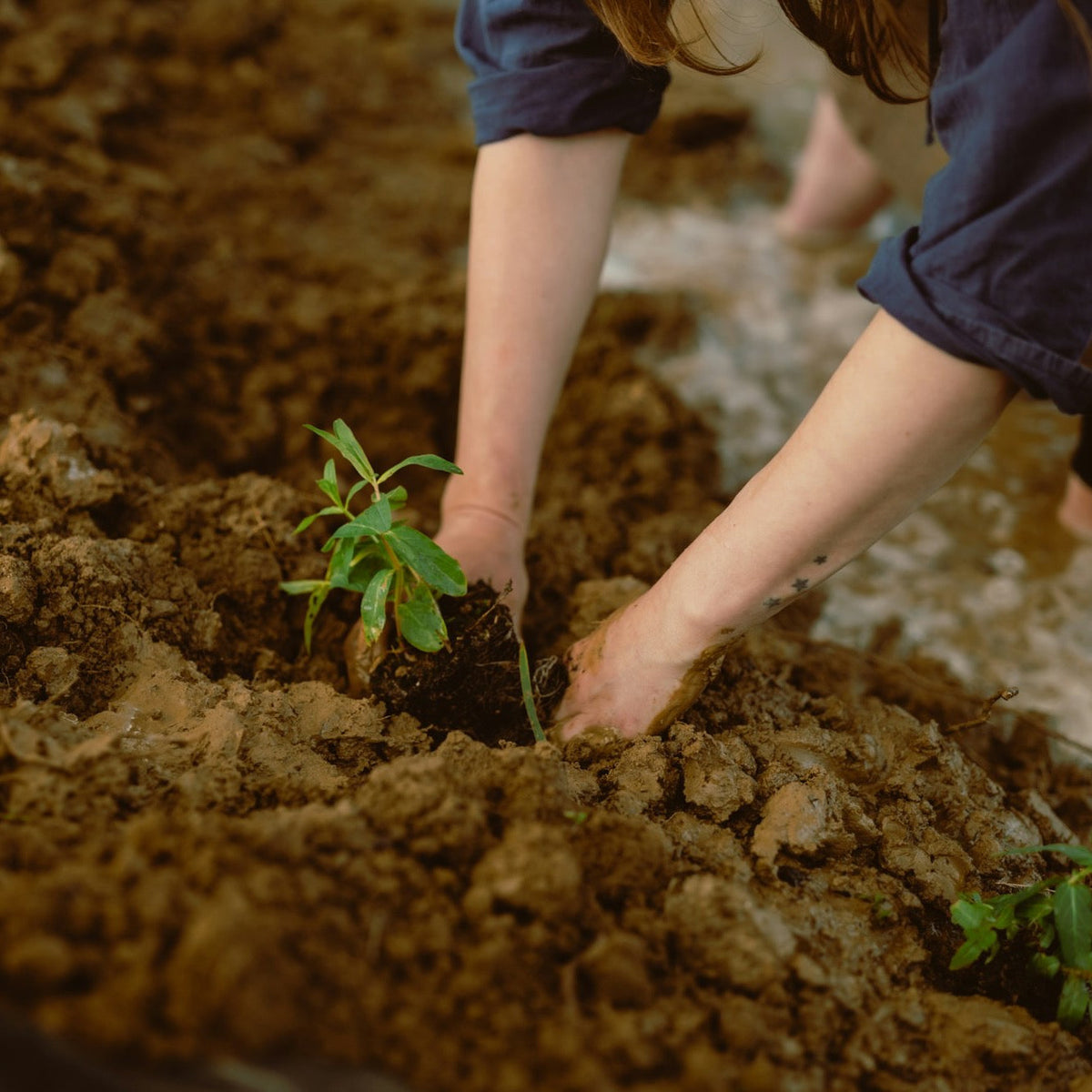
Planting a shrub or a small tree is one of the gentlest ideas, with one caution: cremated remains are very alkaline and high in salt, so placing them straight into a planting hole can harm young roots. Mix a small amount thoroughly into plenty of garden soil, scatter them around an established plant instead, or use a planting urn made for this purpose. A large pot works if you rent or might move.
- You'll need
- a plant suited to your climate, plenty of soil, a trowel
- Good for
- gardeners, and anyone who wants something that changes with the seasons
Bury them
7. In your yard
Burying ashes is usually simpler than burying a body, and on your own property it's often allowed. Rules still vary by city, county and homeowners' association, so check before you dig, and call 811 first so underground lines can be marked. If you rent, ask your landlord. A biodegradable urn returns to the soil over time. A sealed urn, buried a little deeper, keeps them together if you ever want to move them. A flat stone or a garden marker shows where they are.
8. In a pet cemetery
Many pet cemeteries have small plots or niches for urns. Ask whether the land is permanently set aside as a cemetery, what the yearly fees are, when you can visit, and whether you can add a plaque with their name.
9. Together with you, one day
Some people want their pet's ashes buried with them. Whether that's possible depends on your state and on the cemetery's own rules, and they differ a lot. If this matters to you, ask the cemetery directly and write your wishes down so your family knows.
Carry a little with you
10. Keepsake jewelry
Pendants, lockets and rings with a small sealed chamber hold a pinch of ashes. Some are simple metal, others have a window. If you want to wear it every day, look for a screw closure with a thread sealant, and take it off before swimming.
11. Memorial glass or ceramics
Glass studios and some potters can set a small amount of ashes into a paperweight, an ornament or a glaze. Each piece comes out a little different. Ask how much ash they need, since it's often less than a teaspoon, and how long the wait is.
12. A painting or a tattoo made with a little of their ashes
Some painters and tattoo studios can mix a tiny amount of ashes into paint or ink. Ask how they handle it, how much they need, and, for a tattoo, how they keep it safe and clean. A small amount is plenty, so the rest can stay wherever you've chosen.
Questions people ask
Is it okay to keep pet ashes at home?
Yes. Keeping pet ashes at home is the most common choice. A sealed bag inside an urn or box can stay on a shelf for years. Keep it somewhere stable, out of reach of other pets and small children, and away from damp.
How long can you wait before deciding?
As long as you need. Some people decide in the first week. Others wait until a birthday, a move or the first anniversary. Nothing about the ashes changes while you wait.
Can I bury pet ashes in my backyard?
Usually, on land you own. Check city, county and HOA rules first, and call 811 a few days before you dig so buried utility lines can be marked.
Can I scatter pet ashes in a park or at the beach?
Sometimes, but rules vary by place. Call the park office, or check your city's or state's website, before scattering anywhere public. When in doubt, a quiet spot on private land with the owner's permission is the simplest choice.
How do I know the ashes are really my pet's?
Ask the crematory whether the cremation was private, partitioned or communal, and how they track each pet. Some use a metal ID tag that stays with your pet through the process and comes back with the ashes.
What if I don't want the ashes back at all?
That's a valid choice too. Many people choose communal cremation, or ask the crematory to scatter the ashes in its memorial garden. Remembering them doesn't depend on keeping anything.
What can I give a friend whose pet just died?
Something small that uses their pet's name is usually safest at first: a card, a dropped-off meal or a donation in the pet's name. Our guide on what to get someone who lost their dog has more ideas, and the words to go with them.
A small likeness beside the urn

Some families like to set a photo, or a small figure of their pet, next to the urn, so the shelf shows who they were as well as where they are. At PawChibi, we design a small custom pet memorial figurine from your photos, and our artisans paint it by hand. Our pieces are printed solid, so they don't hold ashes; they sit beside them. Older photos are welcome, and we work from 3–6 of them: front, side and back. Choosing "Pet has passed away" on the order lets us know, so our messages are written with that in mind, and we won't photograph the finished piece unless you ask us to. You'll see a color 3D preview of them first.
From our studio, one tip that helps with any portrait: the side and back views are often the hardest to find. Short videos tend to hold them, so pause a few clips and save those frames whenever you feel up to it. If you have a choice, pick photos taken in daylight. They keep the truest coat color, which matters most for dark coats.
Take the time you need
A box on a shelf, a handful on the trail, a tree in the yard: each of these is a way of caring for them. Whenever you do decide, the day itself can be a small ceremony. Invite the people who knew them, read a few lines, or walk their route together afterward. If you'd like more ways to remember them beyond the ashes themselves, our list of pet memorial ideas has twenty gentle ones.