A tiny pet needs more than the right breed and coat color. Ear shape, markings and posture help a small figure feel like one particular animal. Chibi design means deciding which of those details to keep, and which to simplify.
Start with the details in their photos
An ear that never stood up, a crooked tail, the shape of a muzzle, a white chest patch or the outline of a long coat can all be useful references. Your notes help us understand which details matter most to you.
Our current range is pet figurines and keychains. Each begins with photos of the pet, and we check whether those photos show enough to make the design.
Recognition is more than breed
A Golden Retriever is not recognizable only because it is golden. Coat direction, head shape, ears, posture and expression all matter. A Corgi stops reading as a Corgi when the legs become slightly too long. A Dachshund can turn into a generic small dog if the chest and body length are simplified in the wrong places.
With cats, markings often carry even more of the identity. Two tuxedo cats may share the same colors but have completely different bibs, paws and facial patterns. A calico's patches need to land where they do on that particular cat, not where patches usually appear.
What chibi style keeps—and what it leaves out
Chibi style enlarges the head, simplifies the body and turns realism toward warmth. It is not a three-dimensional photocopy. The challenge is choosing the smallest set of details that still makes the person who loves that pet say, “That is them.”
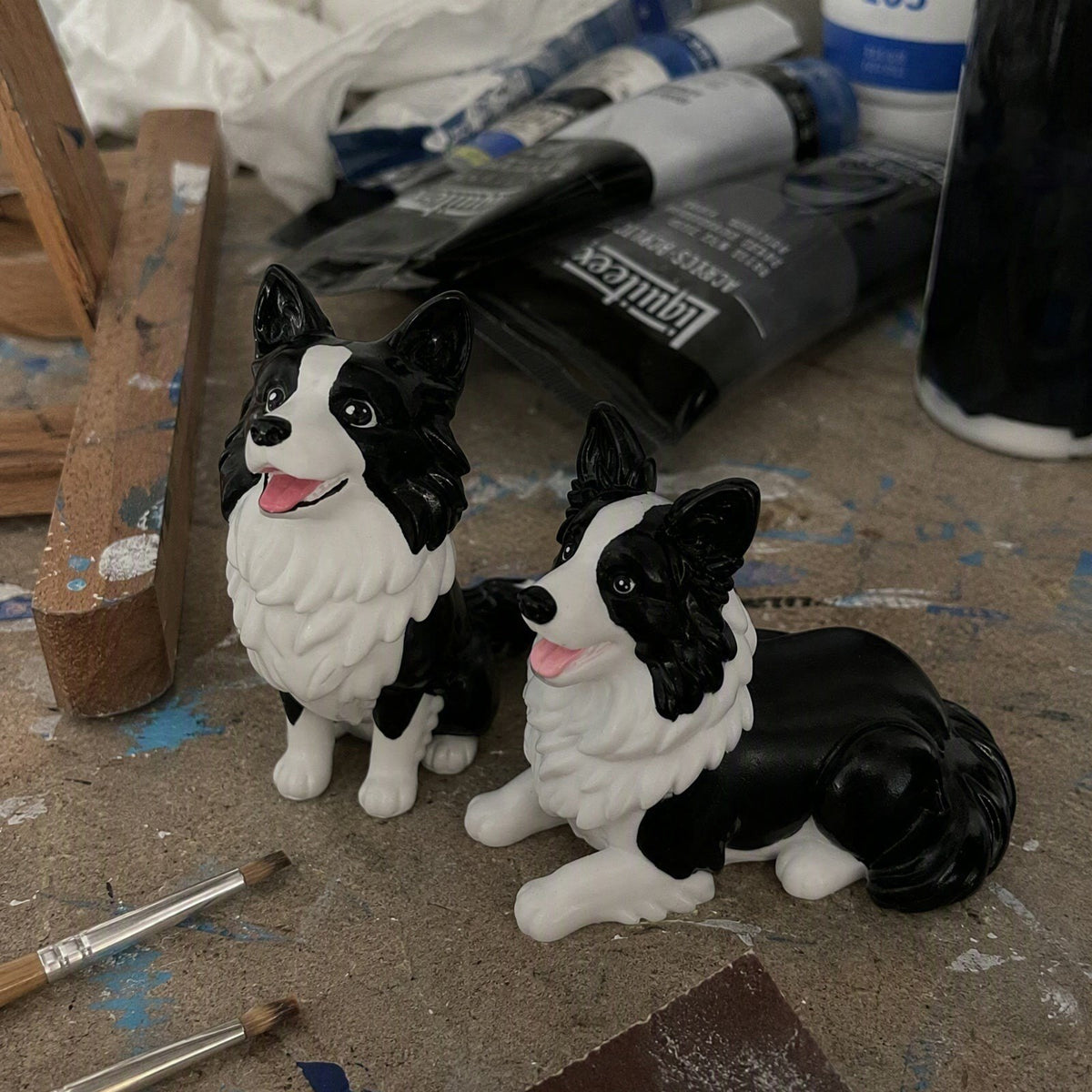
We might exaggerate an upright ear, preserve one eyebrow spot and simplify a mass of fur into a clean silhouette. Good simplification is selective, not careless.
From your photos to the finished piece
- Human photo review. We check the front, side and back views and email if an important detail is missing.
- Digital design. AI helps with the first 3D model. Our team refines the shape and chibi proportions using your photos and notes.
- Color 3D preview. We email it in about 3–5 days from ordering. Reply with any feedback before approval.
- Resin printing and finishing. Once the design moves into production, the model is printed in resin and sanded before painting.
- Hand-painting. Coat colors, eyes and markings are painted onto the resin piece.
- Check and packing. We check the finished piece and prepare it for tracked shipping.
Why the preview matters
A preview separates design decisions from physical production. It gives you a chance to check an ear, tail, patch or overall expression before the resin piece is printed. Crafting takes about 2 weeks after approval, followed by about 15 days of tracked shipping. These stages are estimates, and revisions can affect the overall timing.
You can cancel for a full refund until you approve the color 3D preview. If you do not reply, that option ends when the no-reply period below expires. If we have not heard back after 3 days, we send one reminder. After another 3 days without a reply, we proceed with the latest preview and email you. Any reply pauses that clock. Once you approve, or the no-reply period ends, the order enters production and can no longer be cancelled. Read the cancellation and remake policy.
Why the team reviews the design
Software can help build a starting shape, but photographs rarely answer every question. A tail may be hidden. The back may look different from the front. A dark coat may hide the outline in one image. The team reviews the available views and asks for clarification when a key detail is missing.
What small resin shapes can show
Fur becomes modelled shapes and shallow grooves, with color painted onto the surface. Individual hairs and whiskers are not part of this style. Hand-painted eyes are simplified too; their shape and color should fit the particular pet rather than repeat one fixed design.
See the full process, review the photo checklist, or look through the workbench photos and videos.